F&B Bar COGS Under 25%: Cost Management Strategy for Tea Shops
Executing an effective f&b bar cogs under 25 percent strategy for tea shops and cafes requires a delicate balance between sensory profile and precise raw material yields. At the WECHA tea processing factory with an industrial capacity exceeding 50 tons per month, we have found that over 72% of beverage businesses suffer from eroded profit margins caused by end-of-shift liquid waste and extraction variances. By standardizing brew batches and lowering tea base cost to just $0.04 - $0.07 per serving, operators can reliably anchor overall bar COGS at 19% - 24% while delivering unmatched flavor depth.
1. F&B Bar COGS Matrix 2026: Strategy to Keep Cost Under 25% Without Sacrificing Quality
Cost of Goods Sold (COGS) is the single most critical variable dictating break-even velocity and cash flow reinvestment across modern beverage operations. As commercial rent and payroll expenses continue to climb, capping your total beverage recipe cost below 25% represents the ultimate protective baseline for maintaining 18% - 22% net profit margins.
Deconstructing the 4 Core Pillars of 2026 COGS Structure
A standard beverage build at the bar comprises 4 fundamental cost components: the extracted pure tea base, the cream/dairy matrix (non-dairy creamer, condensed milk, or whole milk), sweetening agents alongside crunchy toppings, and packaging consumables. Sacrificing quality is not the way to reduce costs; rather, true cost optimization relies on boosting bioactive extraction efficiency per gram of dry loose-leaf tea.
Raw Material Expenditure Allocation Against Retail Price
Derived from performance data across more than 300 partner beverage chains, WECHA has established this definitive, margin-optimized operational allocation model for commercial beverage bars:
| Cost Component | Revenue Share (%) | Target Cost (500ml Cup) | Operational Goal |
|---|---|---|---|
| WECHA Specialty Tea Base | 5.0% - 7.0% | $0.04 - $0.07 | Extract full tannins & theanine; deep, lasting finish |
| Royal's Creamer / Dairy Base | 7.0% - 9.0% | $0.08 - $0.11 | Rich, velvety mouthfeel without masking tea aroma |
| Safe King 3Q Toppings & Syrups | 4.0% - 5.0% | $0.05 - $0.06 | Crisp, resilient bite; stable brix level control |
| Packaging (Cup, lid, seal, straw) | 3.0% - 4.0% | $0.03 - $0.05 | Standardized paper/plastic weight; brand presence |
| End-of-Shift Waste | < 1.5% | < $0.015 | Batch brewing tuned to shift turnover; zero dumping |
| Total Finished COGS | 19.0% - 25.0% | $0.20 - $0.31 | Menu retail $1.20 - $1.60; gross margin > 75% |
2. Why Does Tea Base Extraction Management Determine Waste Control Below 1.5%?
Tea base extraction management keeps waste below 1.5% because strict temperature and timing controls prevent clouding (the tea creaming phenomenon), preserve fragile volatile aromatics, and extend stable holding time up to 8 hours without sour oxidation. When baristas execute calibrated 1,500ml micro-batches instead of oversized batches, store managers virtually eliminate end-of-day discarded tea bases.
Thermal Control by Botanical Processing Category
Different tea oxidations require tailored thermal ranges to release beneficial theaflavins and thearubigins without scalding delicate polyphenols. Subjecting delicate green teas to boiling water (above 95°C) burns immature tannins, producing an unpalatable, harsh bite. Conversely, under-heating black teas (below 80°C) fails to solubilize heavy compounds, producing a flat, milky beverage lacking body.
WECHA Industrial Extraction Standard: 1,500ml Standard Batch
The WECHA R&D laboratory recommends these exact brewing parameters for commercial store operations:
| Tea Variety | Dry Leaf Grams | Filtered Hot Water | Steep Temp | Infusion Time | Net Liquid Yield |
|---|---|---|---|---|---|
| WECHA No. 9 Black / Shan Tuyết Black | 80 grams | 1,500 ml | 90°C | 10 - 15 mins | ~ 1,300 - 1,350 ml |
| WECHA Jasmine Blossom Green Tea | 50 grams | 1,500 ml | 80°C (Never 100°C) | 5 - 7 mins | ~ 1,350 - 1,400 ml |
| WECHA Spring Green Oolong | 60 grams | 1,500 ml | 90°C | 8 - 10 mins | ~ 1,320 - 1,360 ml |
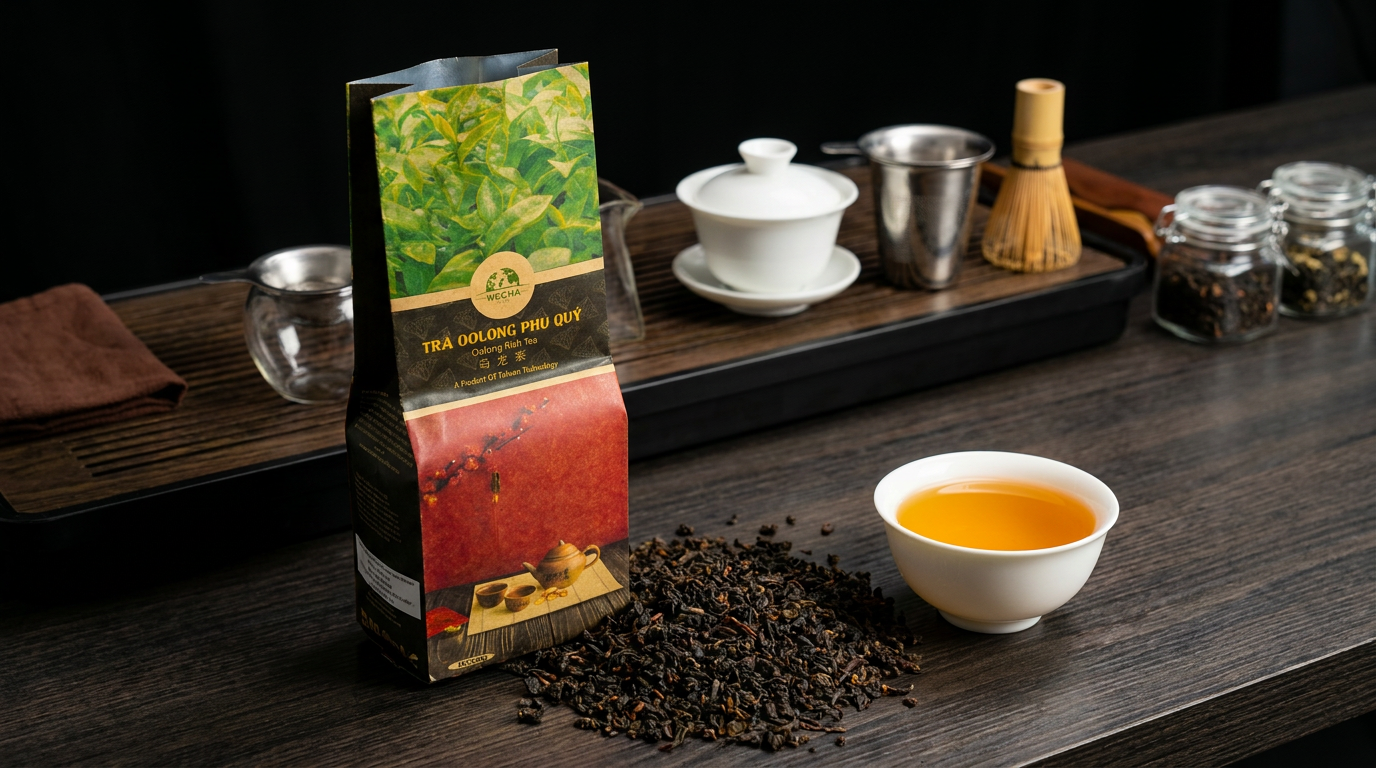
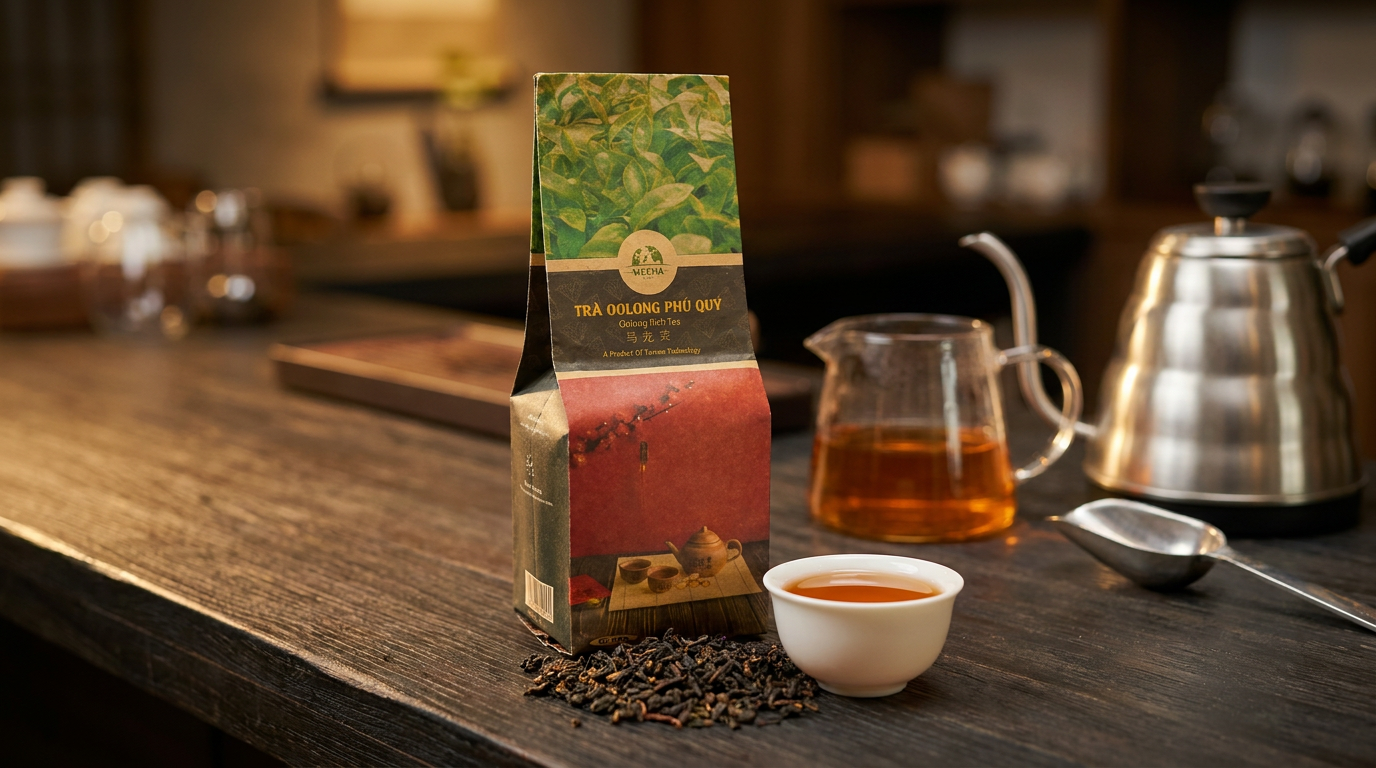
| WECHA Roasted Oolong (Phú Quý) | 70 grams | 1,500 ml | 90°C | 10 - 15 mins | ~ 1,300 - 1,350 ml |
3. What Is the Standard Balancing Formula for Sizes S, M, and L in F&B Menus?
The standard balancing formula for sizes S, M, and L is a calibrated volumetric ratio balancing concentrated tea liquor, Royal's non-dairy milk creamer, and liquid cane syrup to preserve sensory layers and finish across every cup format (350ml, 500ml, 700ml). This exact ratio prevents ice melt dilution from ruining body, keeping each serving consistent whether served dine-in or packaged for delivery.
Harmonizing the Tea Base and Emulsion System
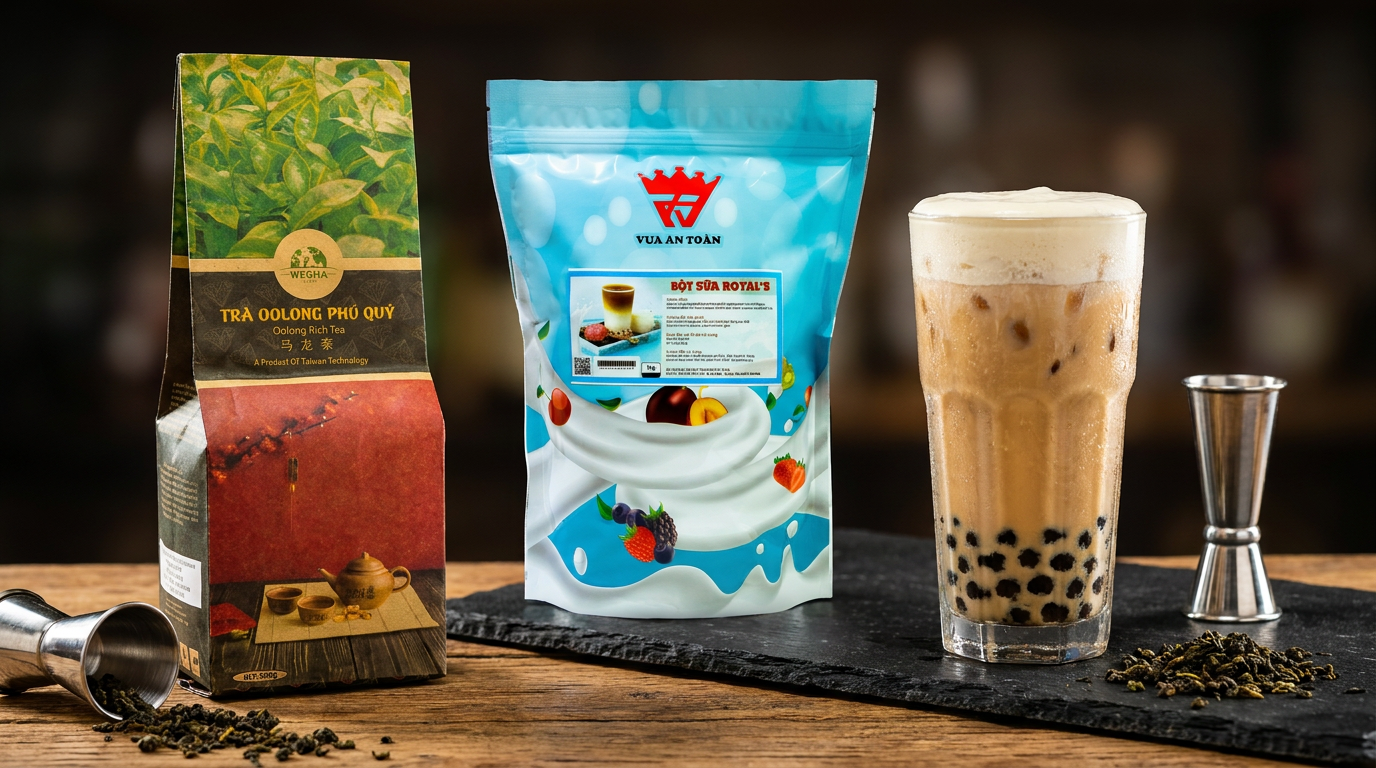
Achieving a COGS profile under 25% requires unifying premium WECHA tea extracts with certified wholesale milk tea ingredients, including Royal's non-dairy creamer and Safe King 3Q jelly pearls. Employing electronic gram scales and calibrated jiggers eliminates manual pouring errors from trainee staff.
3-Tier Size Scaling Recipe Matrix
The standard formulation below demonstrates the recipe design for Classic Milk Tea:
| Ingredient Item | Size S (350ml) | Size M (500ml) | Size L (700ml) |
|---|---|---|---|
| WECHA No. 9 Black Tea Extract (ml) | 100 ml | 130 ml | 160 ml |
| Royal's Premium Beverage Creamer (g) | 25 grams | 32 grams | 40 grams |
| Liquid Cane Sugar / Fructose 55 (ml) | 15 ml | 20 ml | 25 ml |
| Safe King 3Q Crystal Jelly (g) | 30 grams | 45 grams | 50 grams |
| Food-grade Bar Ice Cubes (g) | 140 grams | 180 grams | 220 grams |
| Total Recipe Cost ($) | $0.18 | $0.23 | $0.29 |
4. Standardized 1,500ml Tea Batch Operational Workflow for 100 Consistent Cups
Ensuring that the 100th beverage of the evening shift matches the quality of the first requires modular bar SOPs. Minor discrepancies in water temperature or pressing spent leaves will disrupt beverage brix balance and extract unwanted harshness.
4-Step Flavor Protection SOP
- Dry Leaf Tare & Urn Tempering: Weigh dry leaf portions using precision digital scales. Rinse commercial stainless-steel insulated urns with boiling water for 30 seconds to pre-heat the interior walls.
- Water Dosing & Thermometer Check: Pour 1,500ml of hot water at the calibrated temperature (90°C for black/oolong; 80°C for green jasmine). Agitate gently 3 times clockwise with a bar spoon to ensure even leaf saturation.
- Aroma Seal & Timer Activation: Secure the insulated lid immediately to seal in volatile essential oils. Start digital countdown timers per each tea variety's brewing specifications.
- Filtration & Holding: Decant liquor through fine stainless-steel mesh filters into holding carafes. Never squeeze the spent tea bag; pressing releases harsh, insoluble tannins and creates cloudiness.
"True guest retention in the beverage industry is not won with artificial aromas, but with precision extraction of pure tea leaves. An exceptional base liquor must maintain crystal clarity, natural viscosity, and a lingering sweet finish whether served steaming hot or over ice." — Head of R&D, Vua An Toàn Group
5. Register for F&B Tea Sampling & Download WECHA 2026 Wholesale Price List (.PDF)
Optimize your beverage margins while elevating drink quality with the WECHA professional tea supply system. We offer factory-direct commercial terms for bulk ancient tea distribution alongside comprehensive operational support for the WECHA tea franchise network globally.
Beverage directors and chain founders are invited to request a free tea sample kit to evaluate sensory profiles and conduct bench testing directly at your bar stations.
Related Posts
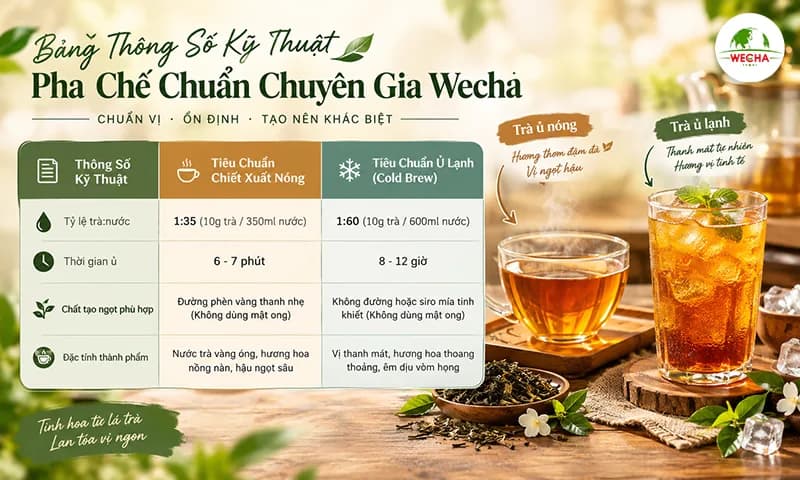
The Optimal Brewing Temperature For Jasmine Green Tea: Secret To Crystal Clear Jade Color
Learn the optimal brewing temperature for Jasmine green tea by WECHA R&D experts. Master exact 80°C brewing to maintain crystal clear jade green color without reddening or bitter taste.
Read More →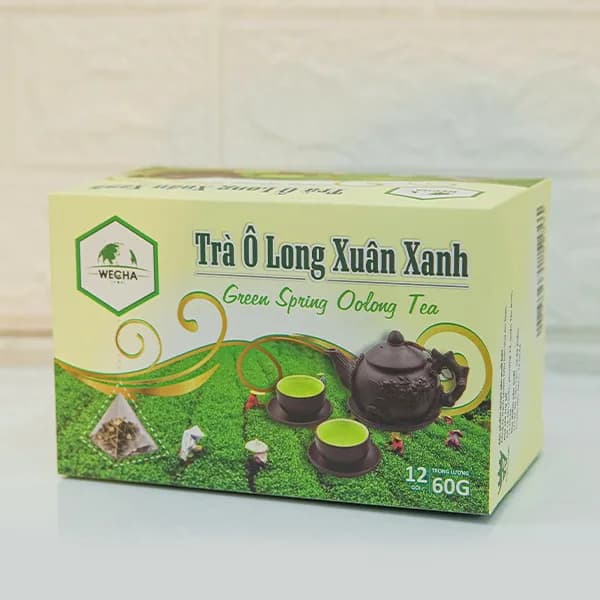
OEM Private Label Tea & Pyramid Tea Bag Manufacturing For F&B Chains
OEM private label tea manufacturing and biodegradable PLA pyramid tea bag packaging for F&B chains. Custom flavor formulation, intellectual property protection and streamlined bar operations.
Read More →