Top 5 Tea Brewing Mistakes Causing Bitterness and Aroma Loss
The most common tea brewing mistakes in commercial beverage bars stem from inaccurate water temperature control, improper steeping times, and rough mechanical handling of delicate tea leaves. At the WECHA tea processing factory with an active capacity of over 50 tons per month, our laboratory data indicates that over 85% of bitter tea base and aroma dissipation failures occur during extraction, even when using top-grade tea bases with a cost starting from just 1,900 VND per cup.
Understanding the biochemistry of polyphenols, free amino acids, and volatile aroma monoterpenes enables bar operators to completely eliminate bitterness and maximize commercial gross margins.
1. Current State of Tea Extraction in F&B: Why Does Tea Base Turn Bitter and Lose Aroma?
The sudden deterioration of brewed tea into an astringent, mouth-drying liquid that lacks aromatic depth is a widespread challenge in commercial beverage shops. The physiological root lies in the extraction imbalance between astringency-producing components (catechins, hydrolyzable tannins) and sweet, soothing aroma molecules (L-theanine, amino acids, volatile monoterpenes).
Broken, low-grade industrial teas rapidly flood the extraction liquid with tannins during the first 60 seconds of heat contact. In contrast, premium materials such as Northwest ancient Shan Tuyet tea or spring-harvested Oolong possess thick mesophyll cell layers, requiring calibrated temperature and steeping duration to unlock authentic floral notes without collapsing cellular astringency barriers.
| Raw Material Grading | Mechanical Structure | Tannin Release Velocity | Aroma Retention Profile |
|---|---|---|---|
| WECHA BOP Black Tea | Uniform calibrated particles (1.5 - 2mm), intact cell walls | Controlled, delivers lingering deep sweetness | Retains natural aromatic oils for 4 - 6 hours |
| Whole Leaf Green / Oolong Tea | Intact one bud two leaves, tightly rolled | Gradual diffusion, smooth and mild mouthfeel | Persistent botanical notes without harshness |
| Industrial Tea Dust / Fannings | Crushed residues, high powder and fiber content | Explosive tannin release, intensely astringent | Lacks natural aroma, heavily dependent on additives |
2. Top 5 Classic Tea Brewing Mistakes Causing Bitterness and WECHA Technical Solutions
In high-volume commercial milk tea and specialty cafe environments, minor operational missteps ruin entire batches of premium tea bases. Here are the 5 classic technical errors alongside standardized brewing solutions established by the WECHA R&D center:
Mistake 1: Using boiling water at 100°C for delicate Green Tea
Scalding green tea leaves with vigorous 100°C boiling water triggers thermal degradation of heat-labile L-theanine molecules and scorches chlorophyll. The resulting liquid turns dull brownish-yellow with a harsh bitterness, while the fresh vegetal notes are permanently destroyed. Solution: Use digital temperature-controlled kettles to cool water down to 80°C - 85°C before brewing.
Mistake 2: Steeping tea beyond designated parameters (Over-steeping)
Bar staff often neglect kitchen timers, letting leaves steep for 20 to 30 minutes. Once the saturation threshold is breached, heavy molecular tannins leach out from leaf veins into the liquor, suppressing all natural subtle sweetness. Solution: Implement independent countdown digital timers for every single brewing batch.
Mistake 3: Squeezing the tea filter bag aggressively
Pressing tea filter bags with tongs or ladles to extract the final milliliters is a destructive habit. Excessive physical force ruptures the remaining plant cell walls, dispersing cloudy particulate matter, crude chlorophyll, and excessive tannins into the brew. Solution: Lift the filter bag and allow natural gravity dripping for 30 - 45 seconds without pressing.
Mistake 4: Sealing the lid tightly during floral tea extraction
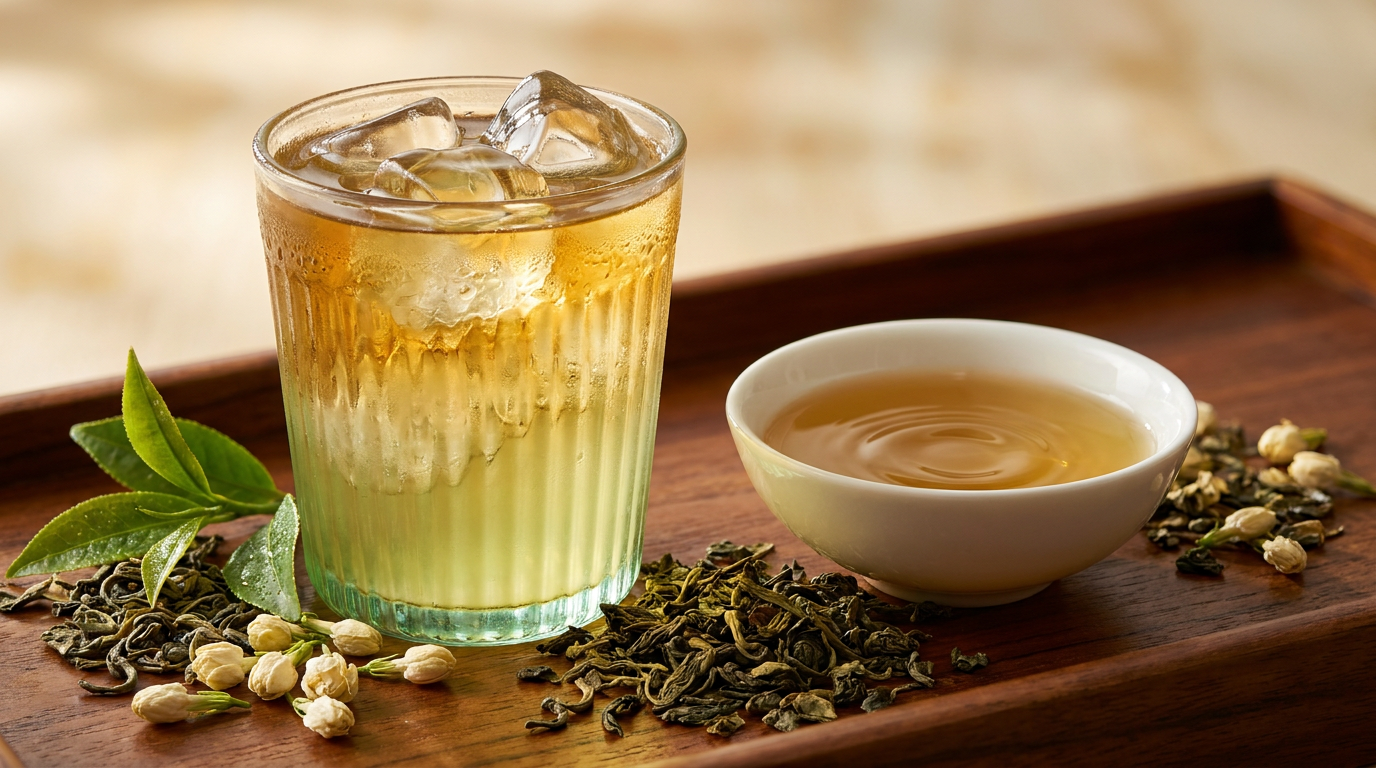
When steeping naturally scented floral teas (such as Jasmine or Lotus Green Tea), trapping intense heat creates an internal pressure-cooker effect. Condensed hot droplets fall back onto fragile floral petals, stewing them and generating an unpalatable stale, cooked odor. Solution: Keep the lid ajar by 1/3 during extraction to allow stale steam to disperse.
Mistake 5: Improper cold shocking causing tea turbidity (Cream Down)
Dumping ice directly into warm tea concentrate while residual micro-particles remain creates colloidal haze. The tea loses its crystal-clear brilliance and experiences accelerated flavor oxidation. Solution: Double-filter the hot tea base thoroughly before initiating indirect cold-shock preservation.
| Standard Tea Variety | Water Temp (°C) | Extraction Time (Min) | Tea to Water Ratio | Lid Sealing Protocol |
|---|---|---|---|---|
| WECHA Green / Jasmine Tea | 80°C - 85°C | 5 - 7 minutes | 1 : 30 (30g tea / 900ml water) | Leave lid ajar (1/3 open) |
| Four Seasons / Roasted Oolong | 90°C - 92°C | 8 - 10 minutes | 1 : 25 (40g tea / 1000ml water) | Tightly sealed to retain roast notes |
| Special Black / Shan Tuyet Black | 95°C - 98°C | 10 - 12 minutes | 1 : 25 (40g tea / 1000ml water) | Tightly sealed for robust body |
3. Why Does Ancient Shan Tuyet Tea Require Rule 8 at 80°C Extraction?
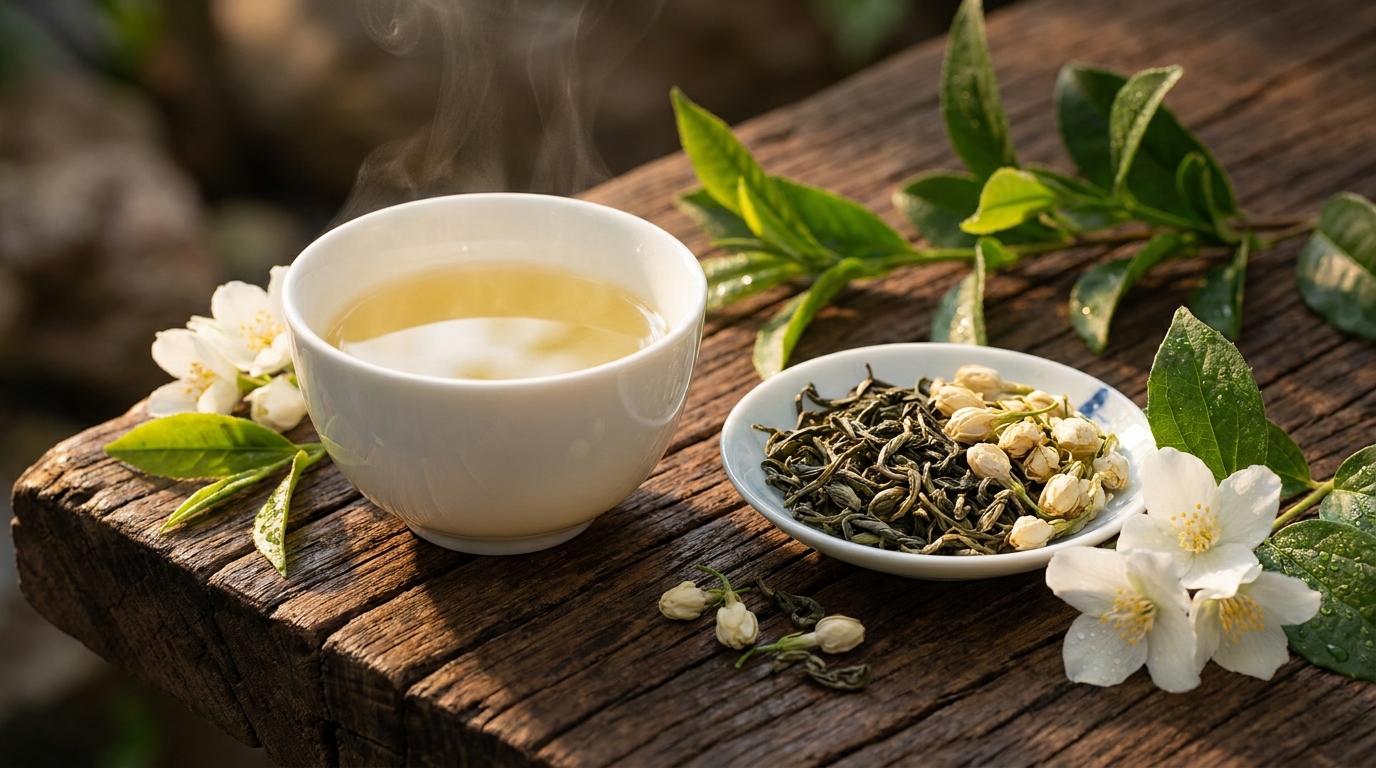
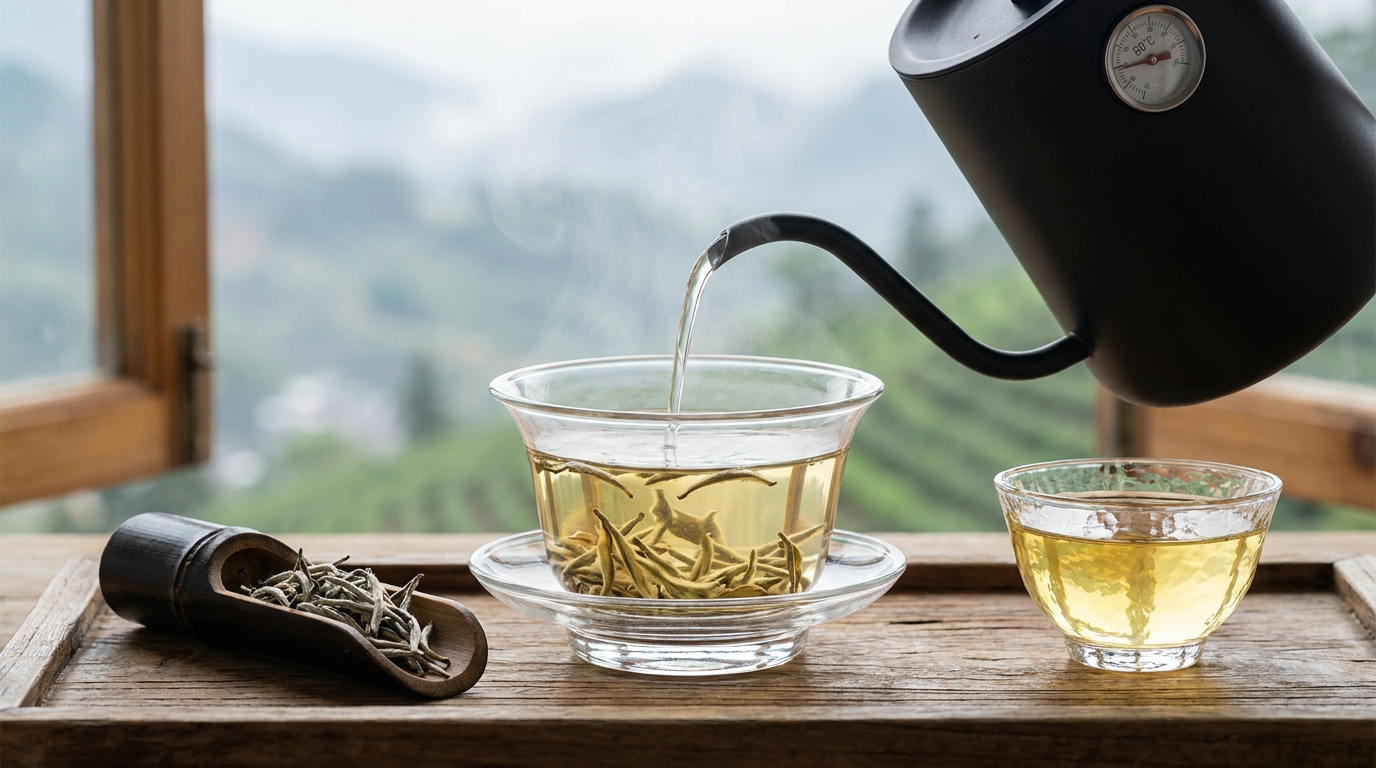
Ancient Shan Tuyet tea strictly requires the Rule 8 extraction protocol at 80°C because its dense snow-trichome buds contain exceptionally high concentrations of temperature-sensitive L-theanine and free amino acids. Maintaining water at 80°C for 5 to 7 minutes smoothly dissolves delicate sweet umami notes without breaking catechin bonds that cause harsh bitterness.
Sourced from high-altitude mist forests above 1,200 meters in Ha Giang and Ta Xua, these heritage tea trees accumulate rich micro-minerals across centuries. The protective white trichome layer shields young tea shoots from intense high-altitude ultraviolet rays.
Biochemical preservation of heat-sensitive amino acids
At temperatures exceeding 85°C, the tertiary molecular structure of umami-producing amino acids undergoes irreversible thermal denaturation. Above 90°C, uncontrolled oxidation triggers the breakdown of natural theaflavins into rough astringency. Applying Rule 8 preserves the elongated sweet floral aftertaste that defines heirloom Shan Tuyet.
"Commercial tea extraction is not an act of aggressive boiling; it is an architectural calibration of flavor. Lowering your water to 80°C is the golden key to awakening the dormant essence of ancient Shan Tuyet tea trees." — Master Tea Blender, WECHA R&D Division.
4. What is the Tea Cream Down Phenomenon and How to Prevent It Completely?
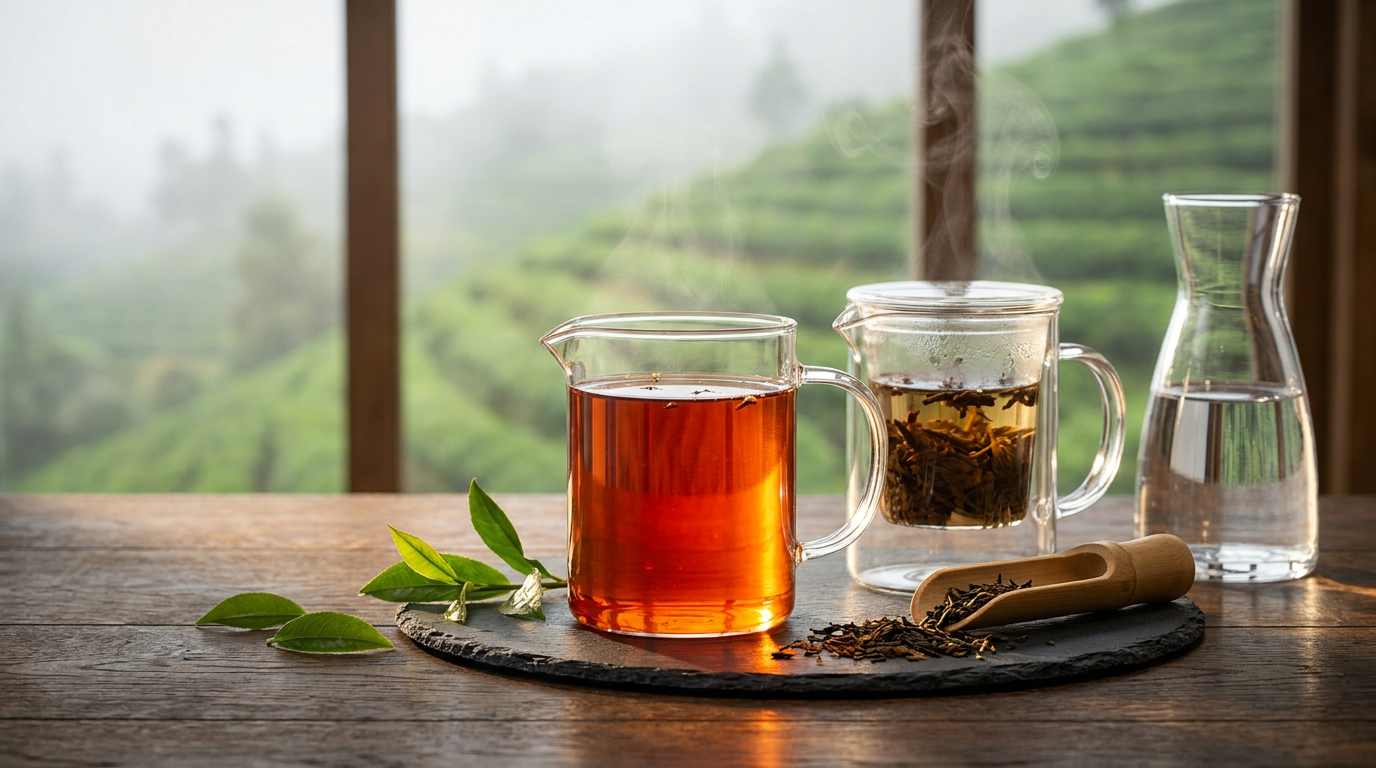
The cream down phenomenon is a natural physicochemical reaction where oxidized thearubigins and theaflavins covalently bind with caffeine molecules, forming insoluble colloidal precipitates once the tea liquid drops below 40°C. To prevent this completely, commercial bars must filter out 100% of tea dregs and micro-dust through dense woven cloth before applying indirect cold-shock cooling in an ice bath.
While this turbidity proves the presence of dense, high-grade polyphenols, cloudy iced fruit tea or milk tea looks unappealing to consumers and compromises product freshness perception.
Molecular precipitation mechanisms in cooling liquids
When the tea concentrate remains above 70°C, kinetic molecular energy maintains thearubigins and caffeine in a homogeneous dissolved state. As cooling occurs, weak hydrogen bonds form between the hydroxyl groups of polyphenols and the nitrogen atoms of caffeine, creating suspended colloidal aggregates that appear as an opaque milky haze.
Three-step standard SOP for cold-shocking tea concentrates
- Step 1 - Complete dry filtration: Immediately when the steeping timer rings, lift the filter bag without squeezing and pour through a 200-mesh dual-layer stainless steel sieve.
- Step 2 - Indirect cooling bath: Place the stainless steel container into an ice-water bath, stirring gently in one direction for 3 minutes to bring temperature down to 20°C - 25°C.
- Step 3 - Hermetic cold storage: Transfer into an airtight food-grade container with a silicone gasket and store at 4°C - 6°C in refrigeration, serving within 8 hours.
5. Standard Tea Brewing SOP & Commercial Bar Application Recipes for Cost Optimization
To maximize operational profitability, commercial beverage operators must unite factory-direct materials from verified suppliers like WECHA's wholesale milk tea ingredients hub with precise bar recipes. Here is our calibrated commercial recipe for Premium Jasmine Fruit Tea optimized for high margins:
| Key Ingredients | Size S (350ml) | Size M (500ml) | Size L (700ml) | Technical Role in Beverage Profile |
|---|---|---|---|---|
| WECHA Jasmine Tea Base | 100ml | 130ml | 160ml | Crisp botanical base note, floral elevation without grassy astringency |
| SAFE KING Fruit Syrup (Peach/Lychee) | 25ml | 35ml | 45ml | Authentic fruit aromatics and body stabilization |
| Refined Cane Sugar Syrup | 10ml | 15ml | 20ml | Balances fruit acidity and expands sweetness spectrum |
| Purified Ice Cubes | 150g | 200g | 250g | Instant chilling, captures volatile aromas during cocktail shaking |
| Cost Component (Size M - 500ml) | Standard Portioning | Ingredient Unit Price | Line Total (VND) |
|---|---|---|---|
| WECHA Special Jasmine Tea Base | 130ml base (from 4.3g loose leaf) | 280,000 VND / kg | 1,204 VND |
| SAFE KING Fruit Syrup | 35ml | 95,000 VND / 1000ml bottle | 3,325 VND |
| Sugar Syrup & Purified Ice | 15ml syrup + 200g ice | Operational consumables | 650 VND |
| PP Cup, Dome Lid & Jumbo Straw | 1 complete set | Packaging inventory | 1,100 VND |
| Total Finished Product Cost | Size M 500ml | Suggested Retail: 29,000 VND | 6,279 VND (78.3% Margin) |
All partners participating in the WECHA tea franchise network receive comprehensive SOP training to ensure immaculate beverage consistency across nationwide retail locations.

6. Claim Free WECHA Tea Sampling Kit & Register for Tea Base Optimization Consulting
The quality of your tea concentrate serves as the foundational pillar of any successful beverage enterprise. Do not allow subtle brewing errors to drain your operational profitability or alienate loyal customers.
By partnering with WECHA — the leading industrial processor and supplier offering wholesale ancient tea supply across Vietnam and export markets, you secure professional R&D consulting backing:
- Complimentary Sample Kit containing our 5 best-selling commercial tea bases.
- Customized water TDS analysis and recipe balancing for your specific store menu.
- Guaranteed production consistency at 50 tons per month with rigorous ISO/HACCP certifications.
Contact us now to register for your free tea sampling kit and download the official 2026 Wholesale Tea Catalog dedicated to F&B professionals.
Professional Milk Tea Brewing & Shop Setup Masterclass
Masterclass by Passion Link Academy: Commercial tea extraction, standardized 3-size recipes (M, L, XL), and profit-maximizing cost control below 15%.
1. 24h Stable Brewing
Precise 85°C - 95°C extraction for 10-15 mins, rich body without harsh astringency.
2. Standard 3-Size Ratio
Exact gram/ml ratios for M (500ml), L (700ml), XL (1000ml) to preserve balance over ice.
3. Cost Control ≤ 15%
Direct factory tea pricing from 1,600 VND/cup, securing maximum operating profit.
🎓 Professional Boba Tea Masterclass at Passion Link Academy
Over 10,000+ successful shop owners trained across Vietnam. Inquire now via hotline: +84 333 033 444
Related Posts
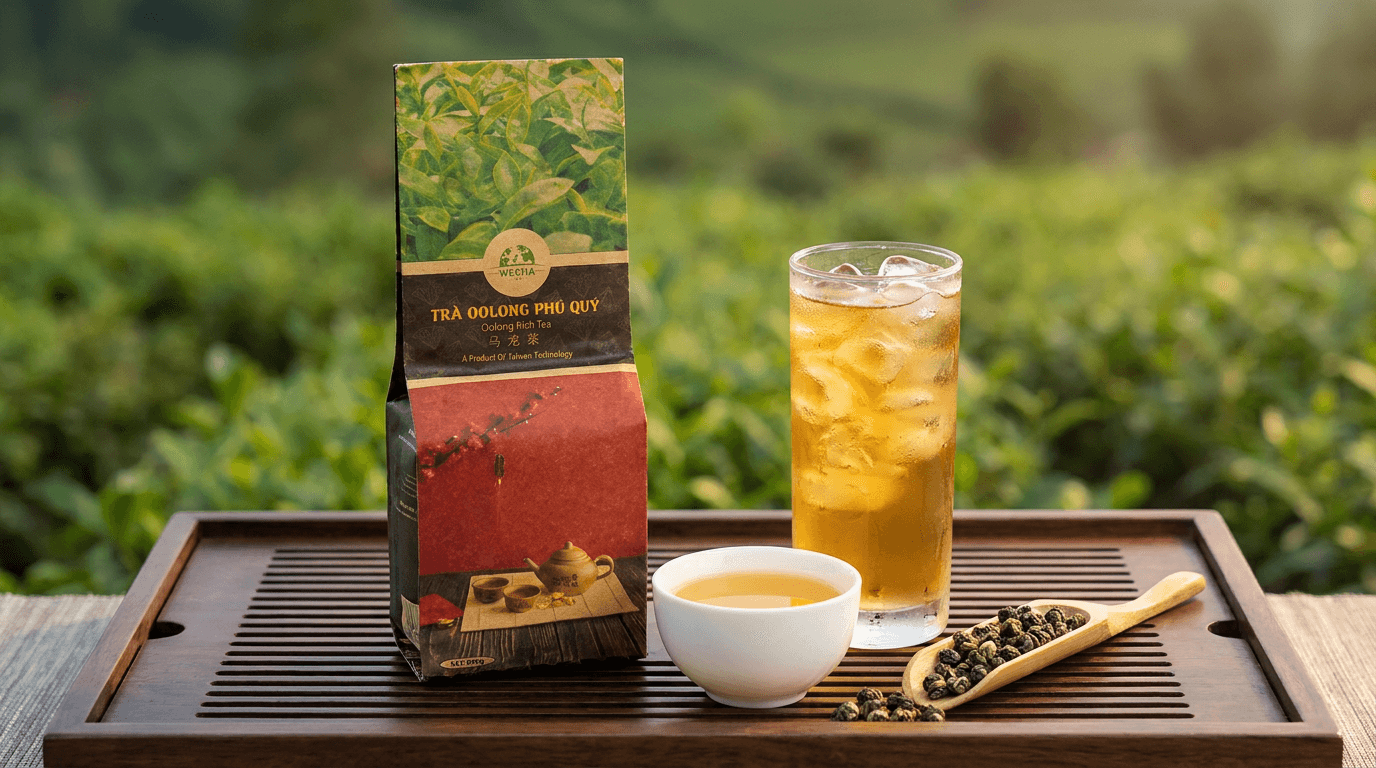
Zero-Residue Clean Tea: WECHA Factory Pesticide Testing Protocol
Explore WECHA's zero-residue chemical testing protocol across 500+ Eurofins and Quatest 3 indicators, delivering pure export-standard tea bases for F&B chains.
Read More →
OEM Bubble Tea Ingredients Supplier Vietnam: Factory Direct Wholesale
Looking for a reliable OEM bubble tea ingredients supplier in Vietnam? WECHA factory offers bulk teas, non-dairy creamer, 50 tons/month ISO & HACCP certified.
Read More →