Hot Osmanthus Oolong Tea Commercial Recipe for Cold Season Menus
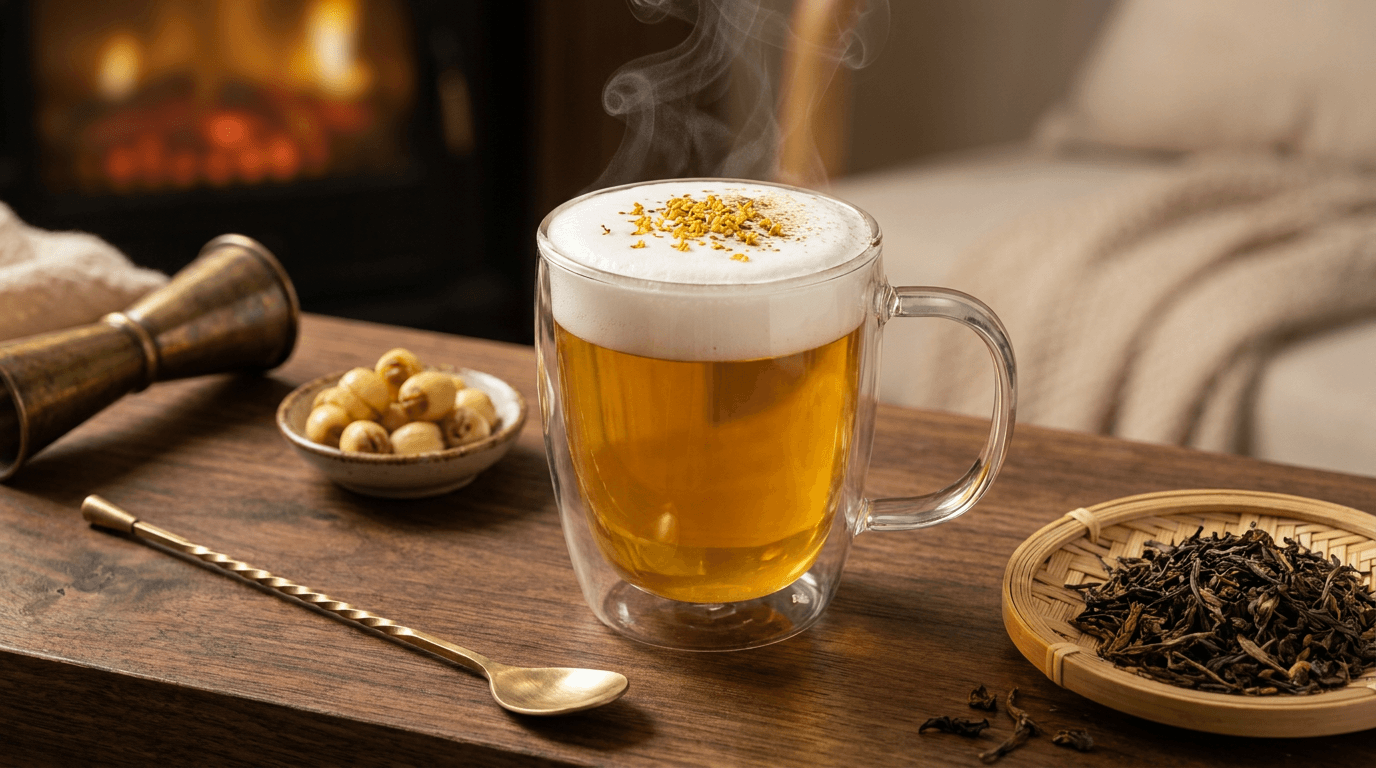
Hot osmanthus oolong tea recipe for the cold season is a strategic beverage solution that empowers F&B chains to maximize winter revenue and drive customer retention. By blending premium Pure Oolong Tea base with freeze-dried osmanthus flowers, the resulting drink achieves a harmonious balance of mellow astringency, lingering sweetness, and warm floral aroma, with raw beverage cost staying between 2,100 VND and 3,800 VND per cup.
1. The Art of Hot Osmanthus Oolong Tea: A Sensory Symphony for the Cold Season
During low-temperature days, consumers naturally seek beverages with comforting heat, full-bodied mouthfeel, and deep aromatic complexity. Hot osmanthus oolong tea is more than a standard warm drink; it represents the culinary intersection of Asian tea culture and modern craft mixology.
The philosophy of cold-weather beverage balance
Oolong tea belongs to the semi-oxidized tea family (20% to 30% oxidation levels), providing a neutral thermal nature that is neither cooling like green tea nor overly heavy like vintage black teas. When paired with osmanthus flowers (Osmanthus fragrans) – renowned for their gentle warmth, golden petals, and ripe apricot aromatic profile – the drink delivers immediate throat-soothing comfort from the first sip.
Technical parameters for osmanthus oolong tea base extraction
To preserve essential floral compounds without extracting harsh bitterness, baristas must maintain rigorous brewing standards verified by F&B tea developers:
| Extraction Metric | Technical Specification | Sensory Objective |
|---|---|---|
| Dry tea dosage | 60g WECHA Pure Oolong Tea | Guarantees solid body and heat resistance |
| Brewing water volume | 1500ml purified water (TDS < 50ppm) | Standard 1:25 extraction ratio |
| Water temperature | 90°C (verified by digital thermometer) | Smooth catechin release without scorching leaves |
| Steeping duration | 8 - 10 minutes (sealed insulation) | Unlocks upfront florals and persistent aftertaste |
| Filtration & hold | Filter through double-mesh, hold at 65°C | Prevents secondary oxidation and discoloration |
2. Terroir Origins and Premium Selection Standards of WECHA Pure Oolong Tea
The caliber of any hot tea beverage can never surpass the agricultural quality of its loose raw tea leaves. To craft a sophisticated autumn-winter beverage, the tea base must originate from high-altitude plantations blessed with fertile basalt soil and substantial diurnal temperature variations.
Physical attributes of WECHA Pure Oolong Tea
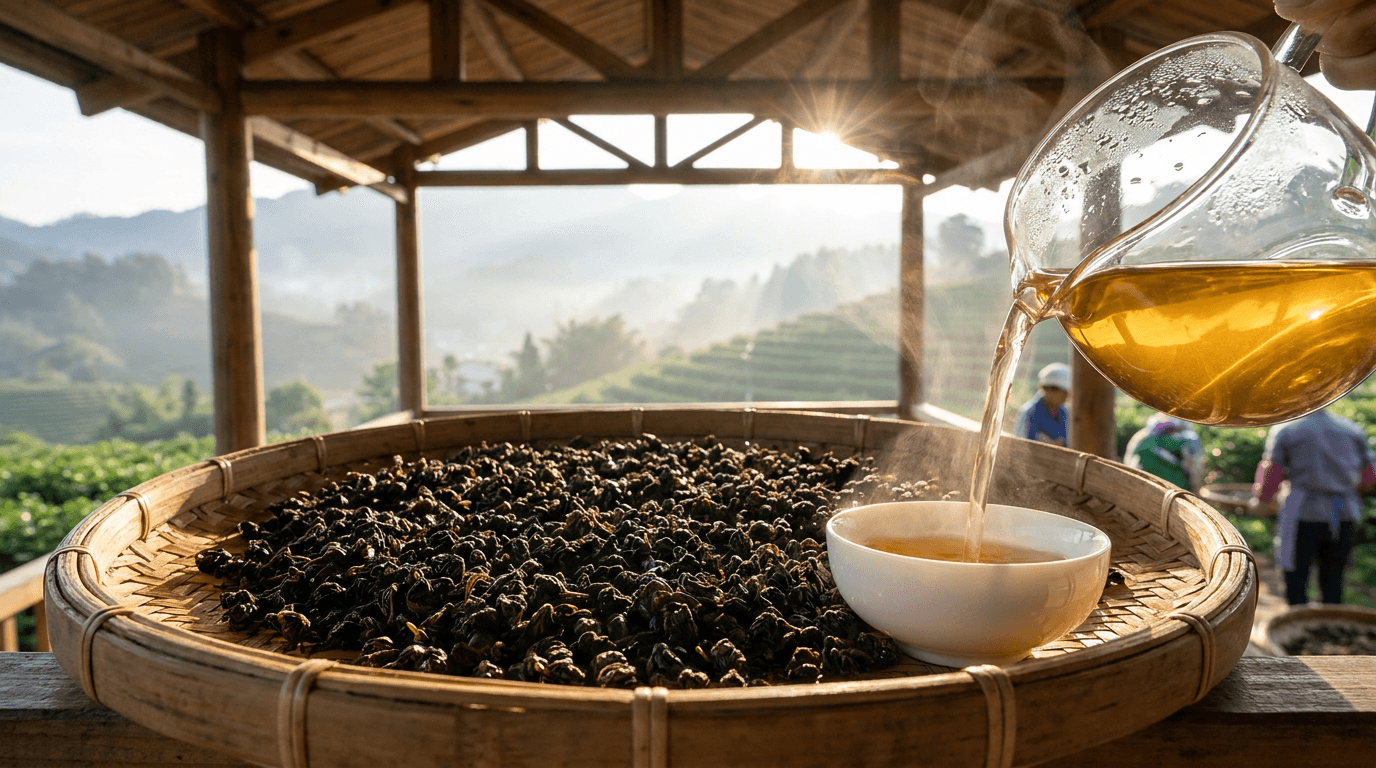
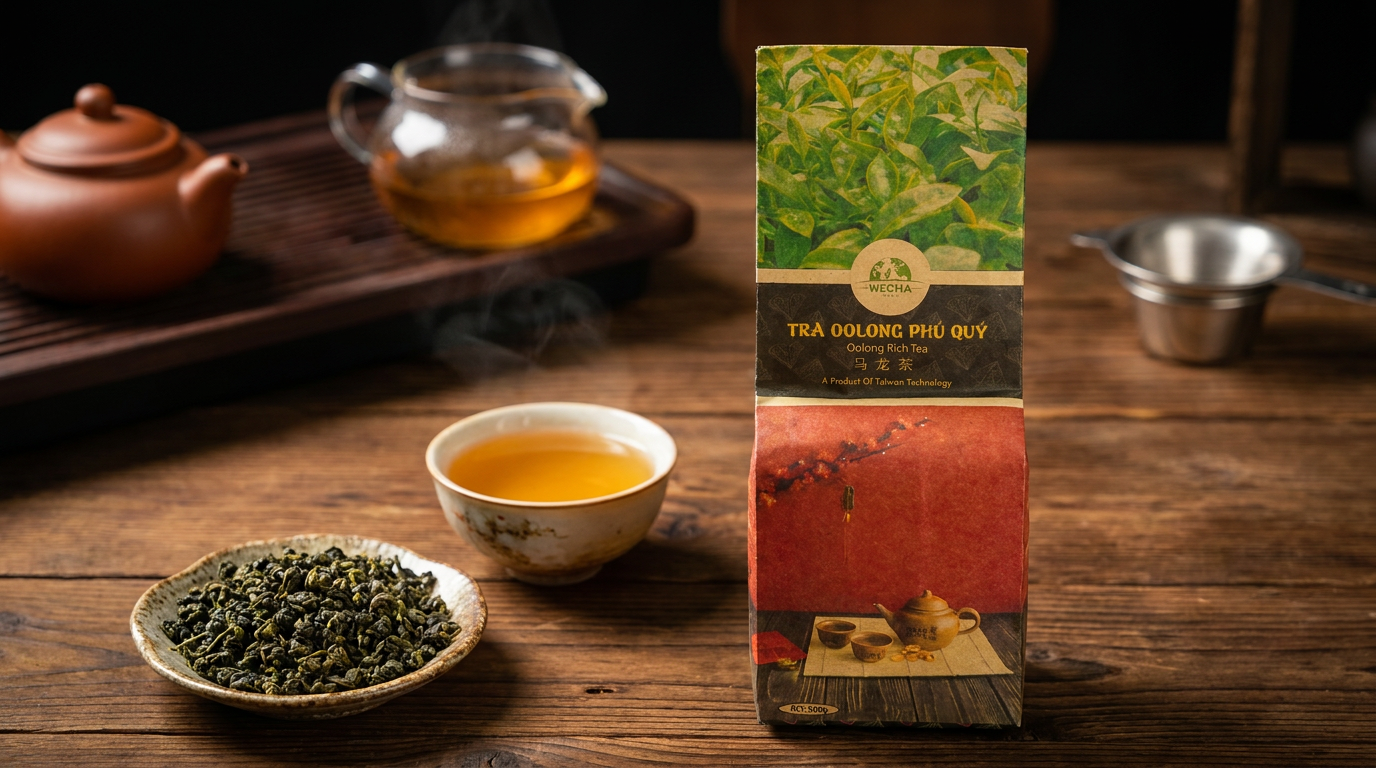
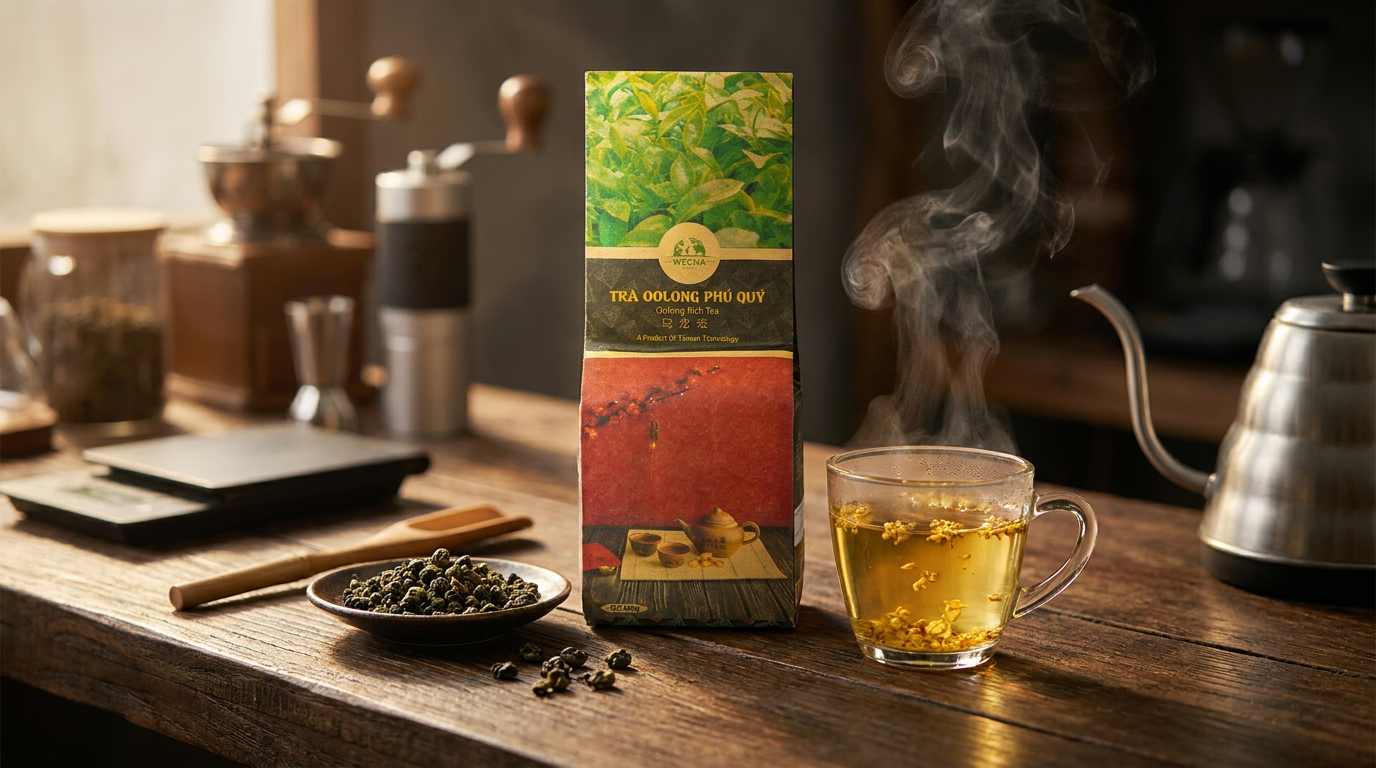
At the WECHA tea manufacturing factory (operating at 50 tons/month capacity), oolong tea shoots are selectively picked at the one-bud two-leaves standard just after dawn. Leaves undergo humidity-controlled partial oxidation followed by tight semi-hemispherical rolling into lustrous, dark-green pearls. Upon infusion with hot water, each pearl unfurls into intact leaf material without excessive breakage or dust.
Comparative quality analysis of tea base options
The distinction between pristine single-origin tea and artificially flavored commercial leaf grades is highlighted below:
| Evaluation Criteria | WECHA Pure Oolong Tea | Artificially Scented Oolong | Low-Grade Broken Tea Fannings |
|---|---|---|---|
| Leaf structure | Uniform rolled pearls, clean, zero dust | Loose granules coated with greasy essence | High stem ratio, fine dust, uneven color |
| Dry leaf aroma | Subtle herbal notes, natural honey tones | Pungent chemical scent, nasal irritation | Musty, stale vegetation, lack of freshness |
| Liquor appearance | Crystal clear amber, viscous sheen | Cloudy yellow, degrades within 15 mins | Murky reddish-brown with heavy sediment |
| Aftertaste (Hui Gan) | Deep throat resonance, lingering sweetness | Dry harsh palate, quick flavor drop-off | Bitter bite on tongue, zero sweet return |
3. Why Does WECHA Pure Oolong Pair Perfectly with Osmanthus Flowers?
WECHA Pure Oolong Tea features a delicate lightly roasted profile and pure floral undertones, acting as a structural anchor that never overwhelms the subtle perfume of osmanthus blooms. Osmanthus essential oil contains naturally occurring aroma molecules like beta-ionone and linalool, which seamlessly infuse into warm 90°C oolong tea to produce a velvety, well-rounded cup.
Chemical interactions between flower oils and tea polyphenols
The semi-oxidized tannins present in premium oolong tea soften the sharp initial fragrance of dried osmanthus petals. Concurrently, the sweet floral notes smooth out any edge on the tip of the tongue, stimulating salivation and offering a refreshing mouthfeel despite the beverage being served hot.
Modern F&B beverage application
For store owners seeking winter menu innovation, uniting single-origin clean tea bases with botanical heritage herbs is a dependable strategy. Today's consumers prioritize natural ingredients, a consumer trend evident in the rising commercial popularity of wild ancient Shan Tuyết tea sourced from the Northwestern highlands of Vietnam.
4. What Is the Extraction Technique to Preserve Osmanthus Essential Oils?
The extraction technique to preserve osmanthus essential oils relies on a thermal-staged steeping process: brewing the oolong base at 90°C for 8 to 10 minutes, then introducing delicate osmanthus flowers during final finishing or cup assembly. This precise control prevents the delicate volatile floral compounds from evaporating excessively or breaking down into sour tannins.
The operational mistake of boiling whole flowers
A frequent preparation mistake in high-volume stores is dumping osmanthus flowers into an active boiling kettle with tea leaves. Osmanthus petals possess delicate cellular walls with volatile aromatic fractions. Boiling them at 100°C for over 2 minutes causes petal browning, liquor haziness, and degrades the refined aroma into burnt straw notes.
Standardized two-stage steeping workflow
To ensure consistency across multi-unit franchise systems:
- Step 1 (Base Steeping): Weigh 60g WECHA Pure Oolong Tea into an insulated tea brewer, pour 1500ml of hot water at 90°C. Seal lid and steep for 8 to 10 minutes.
- Step 2 (Filtration): Strain through a fine double-mesh tea sieve. You will yield approximately 1300ml - 1350ml of clear, fragrant tea base.
- Step 3 (Thermal Holding): Transfer base to a vacuum dispenser maintaining 65°C - 70°C.
- Step 4 (Floral Infusion): Infuse dried osmanthus directly in the serving cup or bloom with hot water for 30 seconds immediately prior to handover.
WECHA R&D Advisory: Avoid using 100°C water straight from an electric boil. Overheating breaks cellular walls too rapidly, releasing excess free polyphenols that cause unpleasant astringency and mask the sweet natural aftertaste.
5. Commercial Recipe for Hot Osmanthus Oolong Tea for F&B Bars
The following commercial recipe is standardized by the WECHA R&D team across three standard cup formats utilized in modern cafes and tea establishments. It integrates the prepared WECHA Pure Oolong Tea base (60g tea : 1500ml water at 90°C), house-made clear rock sugar syrup, and grade-A dried osmanthus petals.
Standardized measurement matrix across 3 cup sizes
| Ingredient & Step | Size S (350ml) | Size M (500ml) | Size L (700ml) |
|---|---|---|---|
| WECHA Pure Oolong Base (90°C brew) | 150ml | 200ml | 250ml |
| Hot water (90°C dilution) | 100ml | 150ml | 200ml |
| Rock sugar syrup (1:1 sugar:water) | 20ml | 30ml | 40ml |
| Grade-A dried osmanthus flowers | 0.8g (approx. 1/2 tsp) | 1.2g (approx. 1 tsp) | 1.5g (approx. 1.5 tsp) |
| Final serving temperature | 65°C - 70°C | 65°C - 70°C | 65°C - 70°C |
Barista assembly procedure
- Pre-heat vessel: Rinse the ceramic cup or paper cup with hot water to equalize vessel temperature.
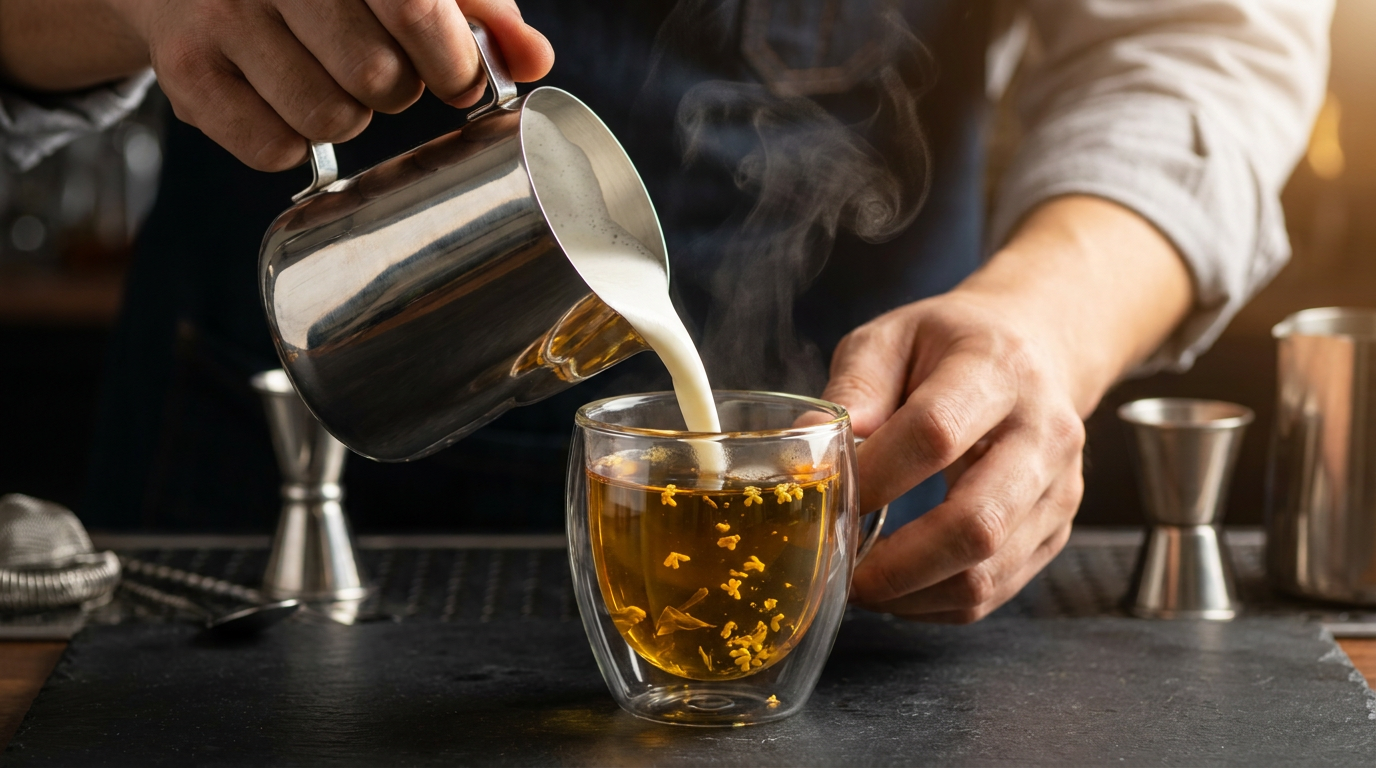
- Combine aromatic base: Add rock sugar syrup and dried osmanthus petals into the cup. Pour the 90°C hot water dilution and swirl for 10 seconds to activate flower oils.
- Integrate tea base: Pour the hot WECHA Pure Oolong Tea base into the cup and stir gently in one direction.
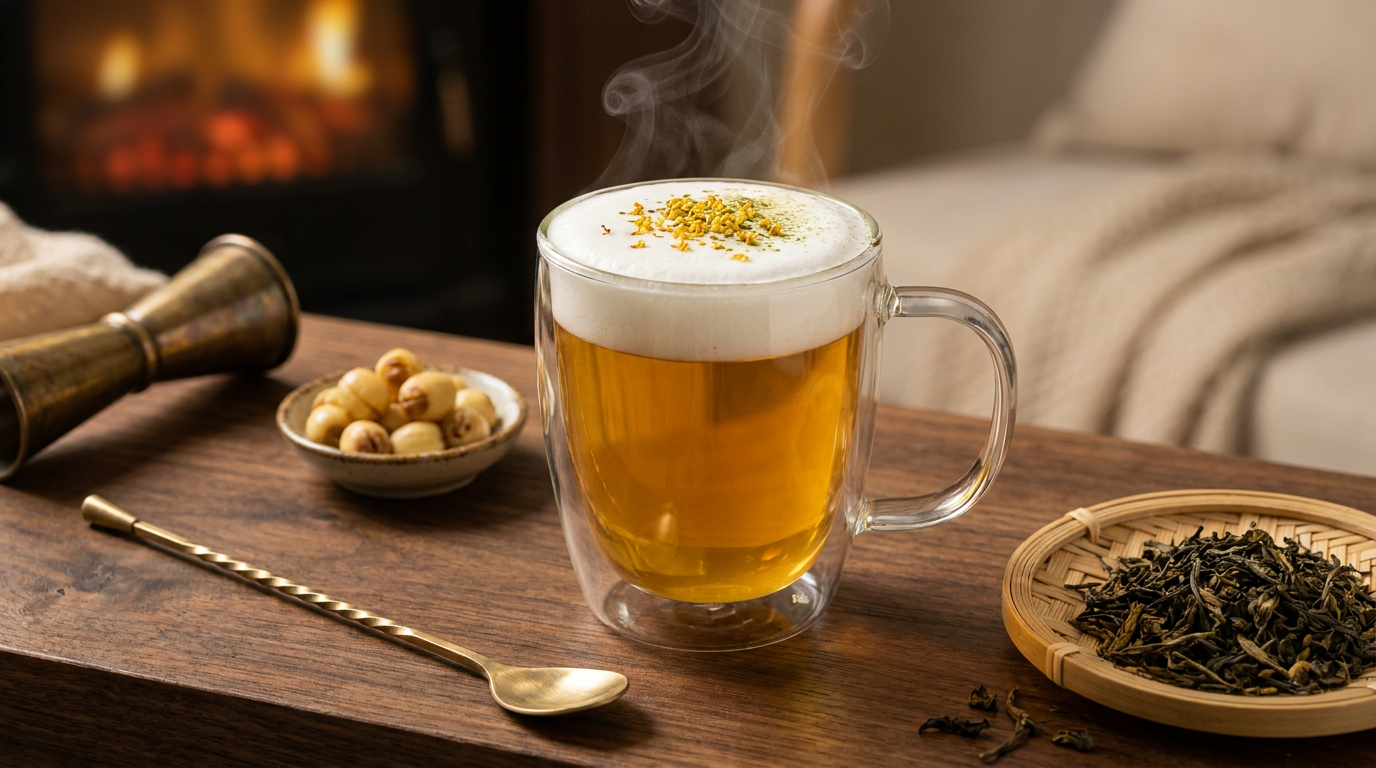
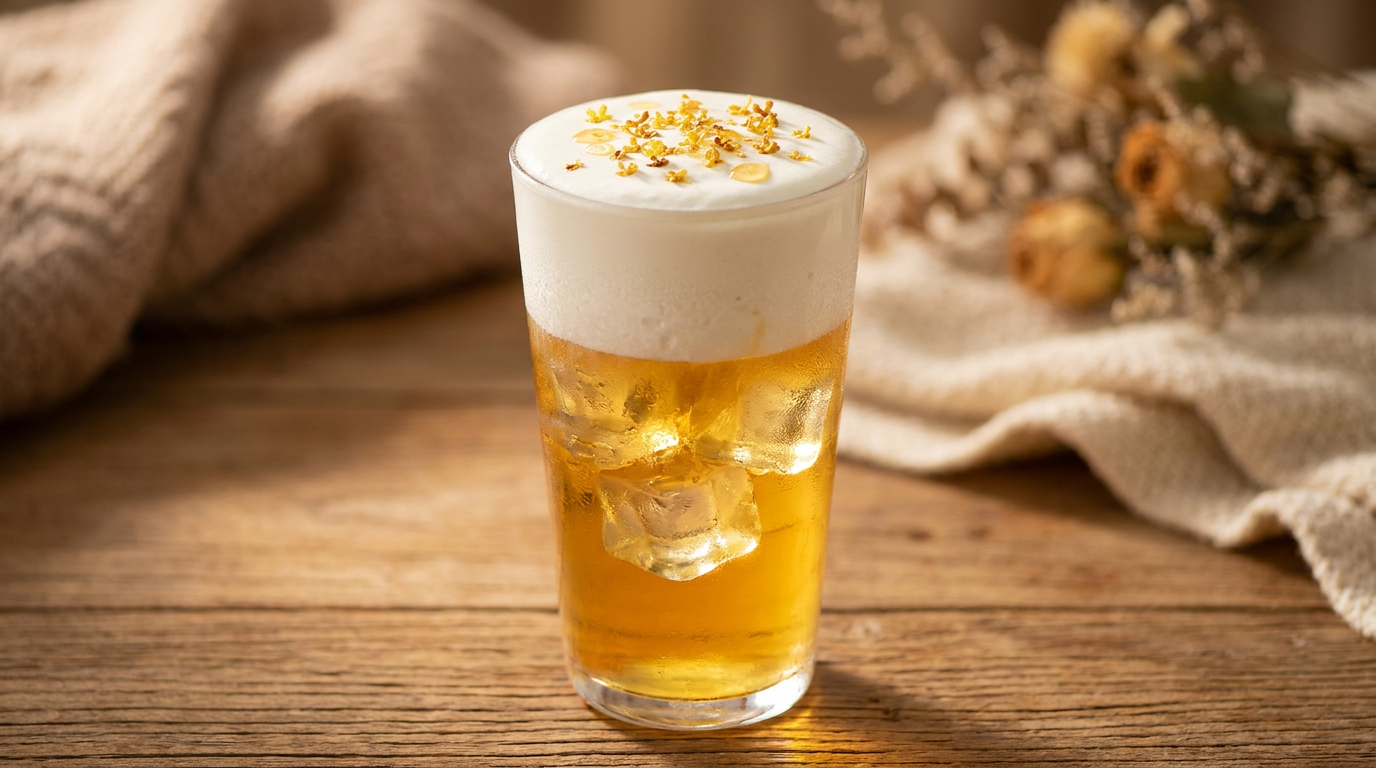
- Garnish and serve: Dust a pinch of fresh dried osmanthus petals across the liquor surface for visual elegance when uncapped.
6. Optimizing Winter Menu Profit Margins for Cafes and Tea Shops
Winter trading often sees iced beverage volume decline by 20% to 35%. Integrating warm botanical teas powered by certified wholesale milk tea ingredients provides the most reliable gross margin preservation tool available.
Financial costing breakdown
To demonstrate commercial viability, the following cost model breaks down a commercial Size M (500ml) serving:
| Cost Component | Portion / Size M | Wholesale Unit Price | Line Total (VND) |
|---|---|---|---|
| WECHA Pure Oolong Base | 200ml (equiv. 9g dry leaf) | 180,000 VND / kg | 1,620 VND |
| Premium dried osmanthus | 1.2g | 650,000 VND / kg | 780 VND |
| House-made rock sugar syrup | 30ml | 25,000 VND / kg raw sugar | 450 VND |
| Double-wall hot cup, lid, sleeve | 1 complete set | Packaging inventory bundle | 950 VND |
| Total Unit Cost of Goods (COGS) | Tea base + florals + sweetener + packaging | 3,800 VND / cup | |
| Suggested Retail Price (SRP) | Standard urban cafe benchmark | 29,000 - 35,000 VND | |
| Gross Margin Yield | Net gross profitability per unit served | 86.8% - 89.1% | |
Seasonal sales enhancement strategies
With gross margins exceeding 85%, store operators can comfortably introduce bundled promotions pairing hot teas with warm pastries, or offer complimentary size upgrades during morning and late evening rush hours to maximize customer loyalty.
7. Register for Free F&B Tea Samples & Download WECHA Wholesale Price List 2026 (.PDF)
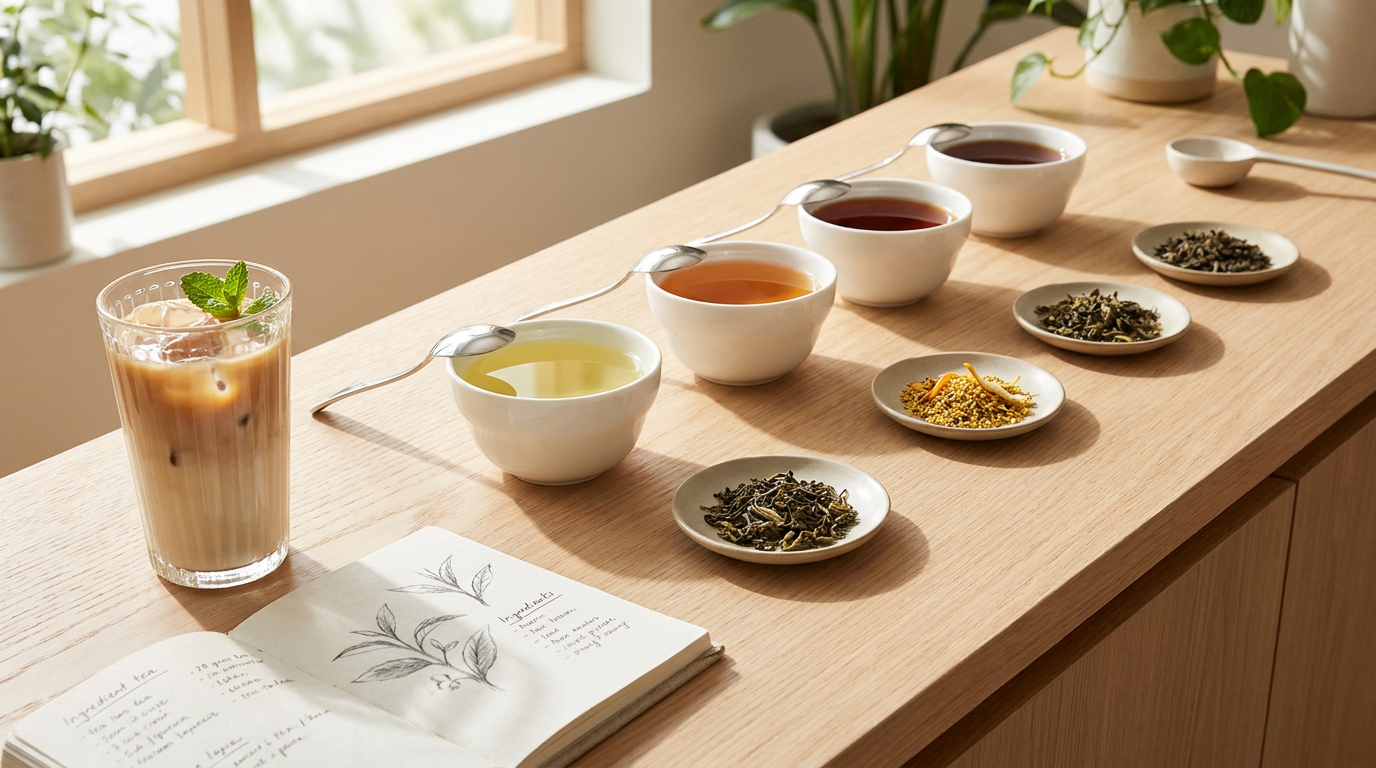
Tea liquor consistency is the foundation of long-term customer retention. Test the superior performance of WECHA Pure Oolong Tea and export-standard tea solutions right on your bar counter before finalizing wholesale contracts.
Our dedicated R&D application team is ready to provide brewing technical support, menu customization, and dispatch sample kits directly to your business across the country. Please register for free tea samples or contact our wholesale desk directly to access complete commercial beverage solutions.
Máy Tính Giá Cost 1 Ly Trà Sữa & Lợi Nhuận Tận Xưởng
Phù hợp: Trà sữa Ô Long Nướng, Kem Trứng Cháy, Trà Sữa Đậm Vị
Doanh thu: 157.500.000 đ/tháng
Bạn muốn nhận mẫu thử Trà Ô Long Nướng Khói WECHA để test chất lượng trực tiếp?
Nhà máy WECHA gửi mẫu thử tận quán miễn phí + File Excel dự toán chi phí chi tiết từng gram & ml.
Professional Milk Tea Brewing & Shop Setup Masterclass
Masterclass by Passion Link Academy: Commercial tea extraction, standardized 3-size recipes (M, L, XL), and profit-maximizing cost control below 15%.
1. 24h Stable Brewing
Precise 85°C - 95°C extraction for 10-15 mins, rich body without harsh astringency.
2. Standard 3-Size Ratio
Exact gram/ml ratios for M (500ml), L (700ml), XL (1000ml) to preserve balance over ice.
3. Cost Control ≤ 15%
Direct factory tea pricing from 1,600 VND/cup, securing maximum operating profit.
🎓 Professional Boba Tea Masterclass at Passion Link Academy
Over 10,000+ successful shop owners trained across Vietnam. Inquire now via hotline: +84 333 033 444
Related Posts
Top 5 Tea Brewing Mistakes Causing Bitterness and Aroma Loss
Discover the top 5 commercial tea brewing mistakes causing bitterness and cloudiness. Master extraction SOPs and bar recipes from WECHA factory.
Read More →
Zero-Residue Clean Tea: WECHA Factory Pesticide Testing Protocol
Explore WECHA's zero-residue chemical testing protocol across 500+ Eurofins and Quatest 3 indicators, delivering pure export-standard tea bases for F&B chains.
Read More →